
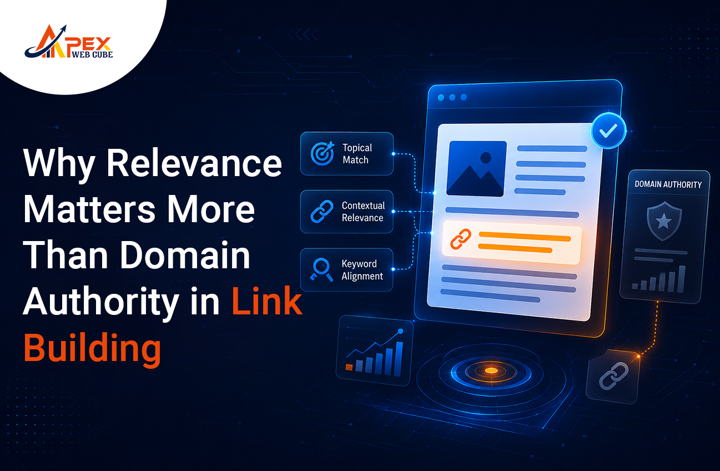

A few years ago, a localized kitchen remodeling business bought a handful of massive, high-scoring tech blog mentions, expecting their local organic traffic to explode. Instead, their search engine rankings went completely flat. This happens because algorithms look at context, not just generic metrics. Chasing inflated numerical scores while ignoring actual industry alignment is a fast track to wasting your marketing budget. This blog explains why topical alignment beats abstract metrics every single time and how to structure a smart strategy that search engines actually reward.
The Flaw in Chasing Third-Party Metrics
Domain Authority is a metric made up by software companies, not search engine companies. Algorithms do not read a Moz or Ahrefs score to decide where to place your website. They read text, context, and user behavior.
Many businesses hire generic link building services thinking that a link from an unrelated site with a score of eighty is better than a link from a hyper-targeted industry blog with a score of thirty. That logic is fundamentally broken. When an automotive blog points to a medical supply store, it looks unnatural. Search engine bots notice this disconnect instantly.
A natural digital recommendation happens because the target site provides extra value to the reader. If the connection makes zero sense to a human reader, it makes zero sense to a search crawler.
Why Topical Alignment Wins the Ranking Game

Modern search systems rely heavily on semantic understanding. They analyze the words surrounding your hyperlink to understand the relationship between the two platforms.
If a highly respected interior design blog links to your custom furniture storefront, it passes deep topical equity. The algorithm sees that experts in your specific ecosystem trust you. This localized trust is what pushes your product pages up the search engine results pages.
Investing in a quality link building services model means prioritizing these tight contextual matches. You want placements on sites that talk about your industry daily. This builds a clean, undeniable web of topical authority around your brand name.
How to Evaluate True Referral Quality
Finding the right digital partners requires looking past basic dashboard numbers to check real-world signals:
- Real Search Traffic: The publishing site must have stable, consistent organic visits from actual human beings.
- Keyword Footprint: The platform should rank for terms that are directly relevant to your business or niche.
- Strict Outbound Standards: The site should not be linking out to thousands of random, unrelated industries.
- Engaged Readership: Active comment sections or social shares prove that the audience is real and attentive.
Real World Shifts in Modern Outreach

The era of mass-producing cheap guest posts on multi-niche platforms is completely over. Search algorithms now actively ignore or discount links that come from known link networks or sites that publish articles on everything from crypto to gardening on the same day.
True placement value comes from manual, relationship-driven prospecting. It takes longer, and it requires deep research into what another website owner actually needs.
Transitioning your campaign to a focused seo link building service helps clean up your profile. Instead of building fifty weak, disconnected mentions, you focus on securing five or ten highly relevant references from active industry portals. This concentrated approach keeps your site entirely safe from sudden core algorithm changes.
The Financial Impact of Smart Targeting
Irrelevant links do not just fail to move your rankings, they actively drain your resources. Every dollar spent on an unrelated placement is a dollar not spent on reaching your actual target audience. When your referral network matches your business focus, you get a secondary benefit that metrics cannot track, which is direct referral traffic. A reader deep into an industry article is highly likely to click your link and check out your solutions. These users are already primed to buy, meaning they convert at a significantly higher rate than random visitors.
Focusing on niche-specific outreach ensures that every earned asset serves a dual purpose. It satisfies the technical requirements of modern search bots while positioning your brand right in front of active buyers.
The Danger of Over-Optimized Anchor Text
When building relevant links, the text used for the hyperlink matters just as much as the source site itself. Forcing exact-match commercial keywords into an informational guest post screams manipulation to modern search algorithms. Instead, natural variations and contextual phrases should weave seamlessly into the surrounding copy, signaling to crawlers that the recommendation is organic and editorial rather than paid and forced.
How Search Engines Detect Footprints
Algorithms have grown incredibly sophisticated at identifying systemic patterns across the web, often flagging footprints left by lazy link-building networks. When a group of seemingly independent sites all link to the same unrelated businesses using identical tactics, their collective authority collapses. True relevance leaves no synthetic trail, as genuine editorial mentions naturally occur across diverse platforms with unique hosting configurations, content styles, and audience demographics.
Understanding Topical Clusters and Link Equity
Link equity is no longer a generic fluid that pours indiscriminately from one site to another; it functions more like specialized knowledge. When a site within your specific topical cluster links to you, it passes a concentrated form of trust that validates your expertise in that exact niche. This clustered authority tells search engines that you are a core pillar of your industry, which carries vastly more weight than a random mention from an unrelated digital giant.
The Role of User Intent in Link Placement
Every search query is driven by a specific user intent, and your link placements should mirror that consumer psychology. A link tucked away in a random footer or a forced author bio rarely aligns with what a reader is looking for at that moment. Strategic placements position your link directly within content that solves a problem, ensuring that the transition from the host site to your landing page feels like a logical, value-added next step for the user.
Why Local Relevance Trumps National Authority
For businesses targeting a specific geographic area, a link from a local chamber of commerce or a regional blog is infinitely more valuable than a high-score national publication. Search engines prioritize geographic context for localized queries, recognizing that community-level connections indicate real-world proximity and local trust. These regional signals are exactly what move the needle for brick-and-mortar conversions and localized search maps.
The Longevity of Relevant Links vs. Artificial Ones
Artificial, metric-chasing links have an incredibly short shelf life, often disappearing when a platform gets penalized, cleaned out, or changes ownership. In contrast, links built on a foundation of genuine industry relevance tend to endure because they provide permanent editorial value to the host website. Because the content remains highly useful to that site’s audience year after year, the webmaster has every incentive to keep the link active and intact.
Auditing Your Current Profile for Irrelevant Clutter
Cleaning up your existing backlink profile is often the first step toward unlocking suppressed search rankings. Running an audit to identify and disavow historical, low-relevance links that were acquired during the “metric-chasing” era can instantly signal to search engines that your site is pivoting to quality. Stripping away the digital noise allows your truly authoritative, niche-specific links to stand out and drive your rankings upward.
Uncovering Hidden Niche Gems in Competitor Profiles
Finding high-relevance backlink opportunities requires shifting your competitive analysis away from chasing the biggest names in the industry. By studying mid-tier competitors who are quietly outranking larger brands, you can uncover hyper-focused industry blogs and trade publications that pass immense topical value. These hidden gems are often ignored by automated link-building software, giving your brand an exclusive, highly targeted edge in the search results.
The Natural Shift from Quantity to Quality
The math behind modern search engine optimization has shifted completely from a game of accumulation to a game of precision. Securing hundreds of low-quality links creates a chaotic digital profile that triggers algorithmic spam filters and damages your brand’s credibility. By focusing entirely on a handful of deeply relevant, high-integrity partnerships, you build a clean digital footprint that search engines can easily trust and reward over the long term.
Future-Proofing Your Brand for AI-Driven Search
As search engines evolve into conversational, AI-driven answer engines, the context of your digital mentions will dictate whether your brand is recommended to users. AI models train on relationships between entities, meaning they look for consistent, authoritative associations within specific industries to verify facts. Earning links on highly relevant portals ensures your brand is recognized as an industry leader, keeping you visible as traditional search results transform.
Conclusion
Sustained visibility comes down to earning trust within your specific vertical. Shifting your focus away from superficial numerical targets and toward genuine industry alignment ensures that your brand builds a resilient, highly effective web presence. By securing mentions on platforms that your actual customers read and trust, you protect your business from future algorithm updates while keeping your customer acquisition costs low. If you want to transform your organic search footprint with highly targeted, meaningful strategies, the team at Apex Web Cube can build a tailored roadmap that turns contextual authority into real revenue.
Frequently Asked Questions
Why does a lower metric site sometimes provide better results?
A site with modest metrics that focuses entirely on your specific industry carries more contextual weight than a giant, generic site. Search engines prioritize the topical relationship between the two platforms. If the content lines up perfectly, the algorithm passes more trust through that connection, which does more heavy lifting for your specific keyword positions.
How do you spot a low quality outreach vendor?
Untrustworthy vendors usually offer flat-rate packages for high-metric sites without asking about your niche. They rely on pre-built networks of blogs that exist solely to sell placements. If a provider cannot show you the exact websites they plan to target or if the sites cover completely unrelated topics on a single domain, you should avoid them.
What is the safest way to scale an outreach campaign?
The safest method is steady, content-driven growth. Create high-value resources, original data studies, or unique tools on your own site, then manually pitch them to relevant editors. This natural pace shows search engines that your brand is earning attention organically through industry merit rather than artificial manipulation.
Should I completely ignore a site metric score?
Metrics are useful as an initial screening filter to weed out dead websites, but they should never be your primary decision maker. Use them to ensure a site has basic baseline visibility, then make your final choice based entirely on content alignment, audience engagement, and whether their keywords match your business universe.