
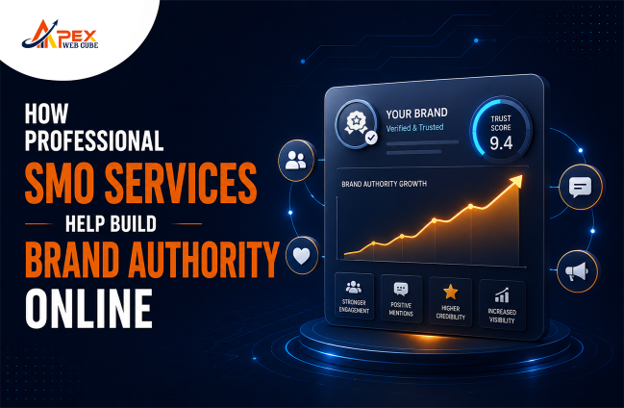
How Professional SMO Services Help Build Brand Authority Online

#1 Digital Marketing Services Provider

14+ Years of Driving Organic Growth with Proven SEO Strategies for Long-Term Business Success

How Professional SMO Services Help Build Brand Authority Online

A small bakery in Jaipur posted the same three photos every week for two years and got maybe forty likes each time. Then they hired someone who actually understood social media optimisation agency work, not just posting for the sake of posting. Six months later, that same bakery had a waiting list for custom cakes and their Instagram was pulling in more walk-in customers than their storefront sign ever did. Nothing about their product changed. What changed was strategy.

That’s really what this blog is about. Not vanity metrics, not chasing likes for the sake of a screenshot. Real brand authority, the kind that makes people trust you before they have even bought anything from you. By the end of this, you will understand what SMO services actually involve, why they matter more now than they did five years ago, and how a proper approach builds credibility that compounds over time instead of fading after one viral post.

Key Takeaways

  1. SMO is about earning attention through optimised profiles and content, not renting it through ads
  2. Brand authority now feeds directly into search visibility, since AI search tools pull trust signals from social platforms too.
  3. Consistency and platform-specific strategy matter more than posting volume.
  4. Buying followers or ignoring analytics quietly kills engagement and authority over time.
  5. Real authority takes three to six months of steady work, not one viral post.

Table of Contents

What Does an SMO Services Agency Actually Do?

A social media optimisation agency refines your profiles, content, and engagement strategy so your brand earns visibility and trust without relying entirely on paid promotion.

That includes fixing bios and keywords so profiles actually show up in searches, building content around questions your audience already has, and keeping engagement consistent instead of sporadic. It’s less flashy than a viral campaign, but it’s the part that actually compounds.

Why Does Brand Authority Matter So Much Right Now?

Discuss Your Next Project

Search behaviour has shifted. People aren’t just Googling anymore; they’re asking ChatGPT, scrolling TikTok for reviews, checking Reddit threads before spending fifty dollars on anything. Trust signals now live across dozens of platforms instead of just one results page.

Google’s E-E-A-T guidelines reward experience, expertise, authoritativeness, and trust, and social proof feeds directly into that. When a brand shows up consistently, answers questions honestly, and gets tagged and shared by real users, both search engines and AI models start treating it as a credible source instead of just another business trying to sell something.
How Is SMO Different From Social Media Marketing?

SMO focuses on organic optimisation and trust building, while SMM relies on paid promotion to get quick reach.

Social Media Marketing (SMM)

Social Media Optimization (SMO)

Relies on ad spend for visibility

Builds visibility through optimized profiles and content

Results stop when the budget stops

Results compound and stick around

Optimized for quick clicks and conversions

Optimized for long-term trust and authority

Works fast, fades fast

Works slower, lasts longer

Most serious strategies use both. But authority, the kind that gets a brand recommended without being asked, leans almost entirely on SMO.

What Actually Builds Authority Through SMO?

A dentist in Mumbai stopped posting generic “book your appointment” graphics and started answering the questions patients actually asked in the clinic. Why do my gums bleed? Is teeth whitening safe? What happens during a root canal? Within four months, his engagement tripled, and half his new patients said they found him through a video, not a search bar.

That’s the pattern a working social media optimization agency chases on purpose, not by accident.

  • Consistency beats perfection. A brand that posts brilliantly once a month and disappears otherwise doesn’t get trusted. Algorithms notice the gaps, and honestly, so do people.
  • Platform-specific strategy isn’t optional. LinkedIn users want insight and credibility. Instagram users want visuals and personality. Treating every platform the same is probably the single biggest mistake brands make.

Engagement matters just as much. Replying to comments, joining relevant conversations, even correcting a mistake publicly when something goes wrong, all of that builds more authority than a perfectly curated feed ever will. People remember how a brand handled a hiccup longer than they remember a flawless product photo.

What Mistakes Quietly Kill Brand Authority?

  • Buying followers, which wrecks engagement rates almost instantly since platforms notice and audiences can smell inauthenticity from a mile away
  • Posting blind without checking analytics, wasting time and budget on content that never resonated in the first place
  • Trying to be active on six platforms instead of doing three properly, which spreads a brand thin and dilutes the message everywhere

How Long Before You See Real Results?

This is the first question everyone asks, understandably. Realistically, meaningful authority building takes three to six months of consistent work. Early wins show up faster, better engagement rates, more profile visits, a slight bump in inquiries. The compounding trust effect, the kind that gets a brand unsolicited recommendation, takes longer but lasts a lot longer too.

A Quick Real-World Example

Speed Up Website Banner

A UK-based fashion label saw a noticeable jump in branded search volume after roughly six months of structured social optimisation work, without increasing ad spend at all. That’s not a fluke. That’s what happens when profiles are optimised, content answers real questions, and engagement is treated as part of the strategy instead of an afterthought.

Smaller businesses see this too, just at a different scale. A local gym doesn’t need a viral moment. It needs consistent proof that real members are getting real results, shared in a way that feels honest rather than staged.
Conclusion

Brand authority isn’t built overnight, and it isn’t built by accident. It comes from showing up consistently, speaking to real questions an audience has, adapting to each platform instead of copy-pasting content everywhere, and treating engagement as a genuine conversation instead of a checkbox.

At Apex Web Cube, our SMO services are built around exactly that groundwork optimised profiles, platform-specific content, and real engagement, so a brand earns trust instead of renting attention for a month and starting over.

FAQs

What is the difference between SMO and SMM?

SMO focuses on optimizing profiles and content to build organic reach and trust, while SMM typically involves paid promotion. Most strong strategies use both, but authority building leans heavily on SMO.

Early engagement improvements often appear within four to six weeks, but real brand authority, the kind that drives inquiries and referrals, usually takes three to six months of consistent effort.

Yes, especially now. Local businesses without a clear social presence often lose customers to competitors who show up consistently, even if their product quality is identical.

Indirectly, yes. Strong social signals, branded searches, and consistent engagement contribute to overall online authority, which search engines and AI tools increasingly factor into how trustworthy a brand appears.

Leave a Reply

Your email address will not be published. Required fields are marked *