
Two websites can publish the same blog post, word for word, and still get completely different results. One shows up on page one within weeks. The other sits buried on page four for months, no matter how much content the team keeps adding on top of it.
The difference almost never comes down to writing quality. A lot of businesses chase the best technical SEO services only after they’ve exhausted every content idea and still cannot figure out why rankings will not budge.
This blog walks through what’s actually working right now for sites that consistently rank and stay ranked, even as search keeps shifting toward AI-driven results.
Key Takeaways
- Core Web Vitals and page speed directly influence how well a site ranks and converts.
- Crawl budget waste on low-value pages quietly limits how much of your site actually gets indexed.
- Structured data now feeds AI search engines, not just rich snippets in traditional results.
- JavaScript-heavy sites risk indexation gaps if rendering isn’t handled properly.
- Internal linking and mobile parity remain two of the most underused ranking levers available.
A website lost 40% of its organic traffic overnight last year. Not because of a Google update. Not because a competitor suddenly outranked them with better content. The culprit was a broken canonical tag that nobody had checked in eight months, quietly telling Google to ignore half their product pages.
This happens more often than people think. Content gets most of the attention in SEO conversations, but the technical layer underneath decides whether that content even gets a fair shot at ranking. If your website’s growth feels stuck despite decent content, this guide walks through what high-performing sites are actually doing differently. Businesses searching for the best technical SEO services usually land here after realizing content alone isn’t cutting it anymore.
Table of Contents
Why Technical SEO Still Matters in 2026
Search engines have gotten smarter, sure. But they still crawl, index, and render pages the same mechanical way they did years back. AI overviews and answer engines don’t change the fact that a slow, broken, or poorly structured site struggles to get seen in the first place.
Technical SEO is basically the plumbing of a website. Nobody notices it when it works. Everyone notices when it doesn’t.
The shift toward answer engines changes things a little. Google’s AI Overviews, ChatGPT search, and Perplexity all pull structured, well-organized content faster than messy pages. A site with clean architecture has a real edge here. It’s not just about ranking on page one anymore, it’s about being the source these engines actually quote.

Core Web Vitals and Why They're Not Optional Anymore
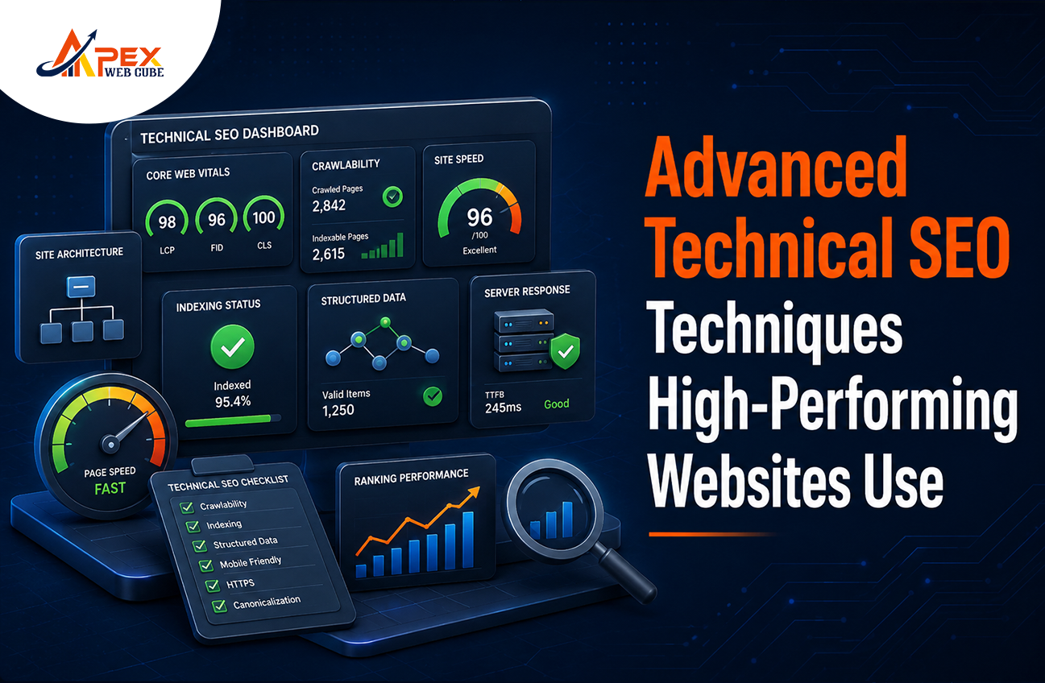
Page speed used to be a nice-to-have. Now it sits directly inside rankings through Core Web Vitals: LCP, INP, and CLS.
Here’s the part nobody tells you upfront. Most sites fail this not because of one huge issue but small, stacked ones. A heavy hero image here, an unoptimized font there, a third-party script loading before anything useful appears.
Core Web Vital | What It Measures | Common Fix |
LCP (Largest Contentful Paint) | Load speed of main content | Compress images, lazy load below the fold |
INP (Interaction to Next Paint) | Responsiveness to clicks/taps | Reduce JS execution time |
CLS (Cumulative Layout Shift) | Visual stability while loading | Set fixed dimensions for images and ads |
Run Page Speed Insights monthly, not just once during an audit. Sites drift back into slow territory faster than teams expect, especially after adding new plugins or tracking scripts.
Crawl Budget and Indexation Control
Big sites waste crawl budget on pages that don’t matter. Filtered category pages, tag archives, duplicate parameter URLs, all of it eats into how much time Googlebot spends on your actual money pages.
Fixing this usually means auditing robots.txt, cleaning up the XML sitemap so it only includes indexable canonical URLs, and using no index tags strategically rather than blocking pages outright in robots.txt, which is a more common mistake than people realize.
A technical SEO agency in India working with international e-commerce brands will typically run a full log file analysis first. That shows exactly what Googlebot is spending time on, which is far more useful than guessing based on Search Console alone.
Structured Data and Its Growing Role in AI Search
Schema markup used to be about rich snippets, star ratings, FAQ dropdowns, that kind of thing. It still does that. But it’s also feeding AI search engines the structured context they need to understand and cite content accurately.
Here is where structured data pays off the most:
- Local businesses using the Local Business schema tend to see stronger visibility in map packs and voice search results
- E-commerce sites with Product schema often get pulled into shopping-style rich results even without running paid shopping ads
- Content sites using FAQ and How To schema get picked up more frequently by AI answer engines because the format is already digestible
Rendering and JavaScript SEO
This one trips up a lot of modern websites, especially ones built on React, Vue, or heavy JS frameworks. Googlebot can render JavaScript, but it happens in two steps, and things get missed along the way.
If critical content, navigation, or internal links only load after JS execution, indexation becomes a gamble. Server-side rendering, or at least dynamic rendering for bots, solves this in most cases. Testing regularly with the URL Inspection Tool catches gaps before they cost rankings.
International and Multi-Region Technical SEO
For brands operating across borders, hreflang implementation becomes critical. A business running the same content for the US, UK, and Canadian markets needs Google to know exactly which version to serve were. Get hreflang wrong, and duplicate content issues creep in, or worse, the wrong regional page ends up ranking entirely.
This is a common gap seen with companies working with a technical SEO agency Canada businesses trust, especially SaaS and e-commerce brands managing multiple currency and language versions of the same site. Small misconfigurations here quietly cannibalize rankings across regions without anyone noticing for months.

Conclusion
Technical SEO isn’t glamorous. It doesn’t produce shareable content or viral moments. But it’s the foundation everything else stands on. A brilliant blog post on a slow, poorly indexed site is basically invisible. Fix the plumbing first, and the content already being created starts performing the way it was meant to.
The sites winning right now, showing up in both traditional search and AI-generated answers, are the ones treating technical SEO as an ongoing discipline, not a one-time audit. Core Web Vitals, structured data, crawl efficiency, and mobile parity all work together, not in isolation.
If rankings feel stuck despite solid content, it’s worth checking whether the technical layer is holding things back. That is exactly where Apex Web Cube comes in, helping businesses across India, Canada, and beyond fix what’s broken under the hood so their content finally gets the visibility it deserves.
FAQs
What is technical SEO and why does it matter for rankings?
Technical SEO covers the backend elements of a website, crawlability, indexation, site speed, structured data, and mobile usability, that determine whether search engines can properly access and rank content. Without this foundation, even great content struggles to perform.
How often should a website get a technical SEO audit?
Most active websites benefit from a full audit every three to six months, with monthly checks on Core Web Vitals, crawl errors, and indexation status. Sites going through frequent changes or migrations need closer monitoring.
Can a technical SEO agency in India help international businesses too?
Yes. Many agencies based in India work with clients across the US, UK, and Canada, handling multi-region setups like hreflang and international crawl strategy at often more competitive rates than local alternatives.
What's the difference between technical SEO and on-page SEO?
On-page SEO focuses on content elements like keywords, headings, and meta tags. Technical SEO focuses on the infrastructure behind the site, speed, crawlability, structured data, and rendering, that allows search engines to actually access and understand that content in the first place.

