
SEO and Digital Marketing Services: How They Work Together to Drive Growth

#1 Digital Marketing Services Provider

14+ Years of Driving Organic Growth with Proven SEO Strategies for Long-Term Business Success

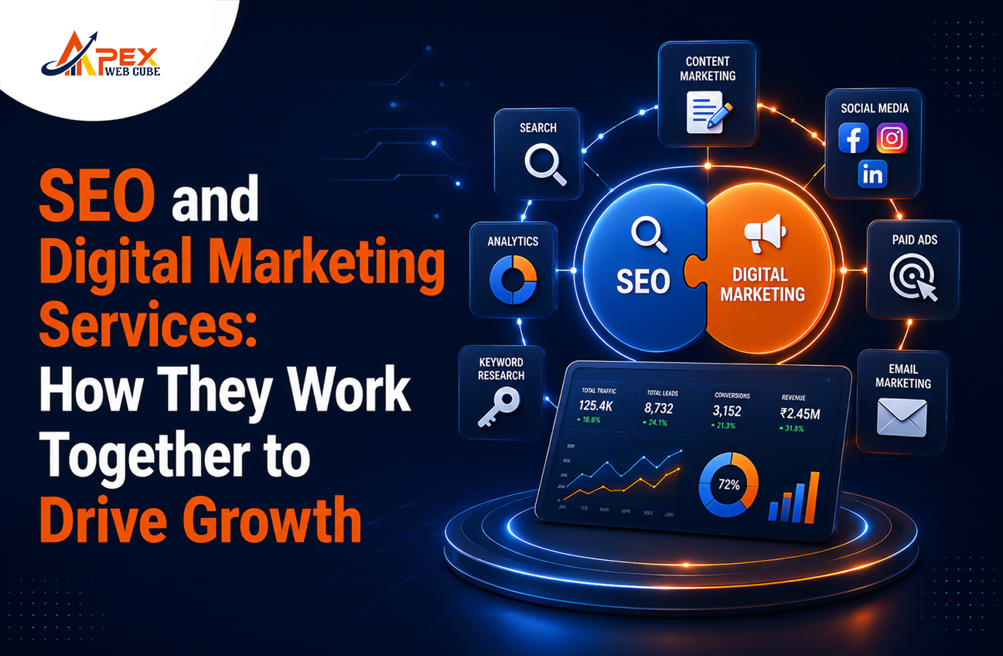
SEO and Digital Marketing Services: How They Work Together to Drive Growth

A small furniture brand in Jaipur once told me they were spending nearly two lakh rupees a month on ads and still could not figure out why their organic traffic sat flat for over a year. Their ads brought clicks, sure, but the moment the budget paused, so did the visitors. That’s the exact gap most businesses fall into when they treat SEO and digital marketing as two separate departments instead of one connected engine. If you are searching for the Best Digital Marketing Services, this disconnect is probably the first thing worth fixing.

This blog breaks down why SEO and digital marketing are not rivals fighting for budget, how they actually complement each other, and what a business in India should realistically expect when both work together properly.

Key Takeaways

  • Nearly 60 percent of consumers research a brand across multiple channels before making a decision, not just search alone.
  • SEO builds long-term visibility. Digital marketing fills the gaps around conversion, retention, and immediate reach.
  • Businesses that align SEO with broader campaigns report stronger lead quality than those running channels in isolation.
  • Not every agency offering the Best Digital Marketing Services in India actually connects SEO data with paid, social, and content strategy.
  • A genuinely integrated agency shares reporting across channels instead of treating each one as a separate invoice line.

Table of Contents

Why SEO Alone Falls Short Today

SEO used to be a checklist job. Add keywords, get a few backlinks, wait around. That approach barely works anymore. Search engines now weigh experience, trust, and user behavior far more heavily than raw keyword density.

A page can be perfectly optimized and still underperform if there’s no supporting presence elsewhere. No social proof, no paid testing, no email nurturing to bring people back. Ranking is only half the job. Getting that traffic to actually convert is the other half, and that part rarely comes from SEO alone.

Ready To Grow Business

Where Digital Marketing Fills the Gaps

Digital marketing covers a lot more ground than people usually assume. Paid ads, email, social, content, influencer work, conversion optimization, each one plays a different role, and they all quietly feed back into SEO.

A well-performing ad reveals which keywords actually convert, not just which ones get searched. Email campaigns bring repeat visitors, which signals relevance to search engines over time. Social shares can drive referral traffic that indirectly supports organic authority.

This connective layer is what separates a Best Digital Marketing Agency from a vendor running isolated campaigns with no shared data between them.

SEO vs Digital Marketing: What Each One Actually Does

Function

What It Handles

How It Feeds the Other

SEO

Organic visibility, keyword targeting, technical site health

Supplies content and search insight for paid and social campaigns

Paid Marketing

Immediate traffic, keyword testing, budget-controlled reach

Reveals converting keywords that shape long term SEO content

Content Marketing

Blog content, guides, on site authority

Becomes raw material for email, social captions, and ad copy

Social Media

Brand reach, engagement, community trust

Drives referral traffic and signals relevance indirectly

Email Marketing

Retention, repeat visits, nurturing leads

Brings returning visitors that strengthen organic engagement metrics

The India Specific Angle

Digital Marketing Services in India have grown fast, and honestly, a bit messily too. Plenty of agencies promise page one rankings in thirty days, which just isn’t how algorithms work. Real growth takes patience and consistent testing.

India’s audience is also incredibly varied. Regional language search, mobile-first behavior, and price-sensitive buying decisions all shape what actually works. A strategy built for a Delhi-based B2B company won’t translate directly to a Tier 2 city ecommerce brand. Agencies that understand this local nuance while applying tested SEO fundamentals tend to deliver steadier results.

How to Choose the Right Agency

  • Ask how channels are connected, not just how each one performs individually. Shared reporting between SEO and paid teams is a good sign.
  • Check for local market understanding, since regional buying behavior in India varies more than most agencies admit.
  • Look for realistic timelines. Anyone promising rankings in weeks is either inexperienced or not being straight with you.
  • Request actual case data, not just screenshots of ranking positions with no context around revenue or leads.

Common Mistakes to Avoid

  • Chasing broad, high competition keywords instead of specific ones actual customers search for.
  • Abandoning SEO the moment paid ads start performing, without realizing organic traffic is what sustains growth once budgets tighten.
  • Treating a website like a static brochure instead of a living asset that needs regular updates based on real search demand.
  • Measuring success through impressions or follower counts instead of conversion rate and lead quality.

A Quick Case Study

A retail client we worked with had solid product pages but almost no blog content. Their rankings were mediocre despite decent pricing and inventory. Once keyword research got paired with a content calendar built around real customer questions pulled from support tickets and social comments, organic sessions grew close to 60 percent over five months. Nothing dramatic, just consistent alignment between what customers were asking and what the site actually answered.

That’s the kind of result that comes from treating SEO as one arm of a bigger marketing body instead of a task handed off separately.

How to Measure ROI from Combined Campaigns

Tracking each channel separately rarely tells the full story. A lead might discover a brand through a blog post, get retargeted through paid ads, and finally convert after an email nudge weeks later. If you’re only looking at last-click data, SEO often gets zero credit for that sale even though it started the whole journey. Businesses working with a Best Digital Marketing Agency should ask for multi-touch attribution reporting instead of channel-by-channel numbers, since that’s the only way to see which combinations of SEO and digital marketing services are actually driving revenue rather than just activity.
White Label Agency Solutions

Conclusion

SEO and digital marketing were never meant to run in silos. One builds long-term trust and visibility; the other drives immediate engagement and the data that sharpens the other’s strategy. Businesses that treat them as one connected system tend to grow steadier and recover faster when market conditions shift.

If you are comparing options and want a team that genuinely connects these pieces instead of running them apart, Apex Web Cube approaches every project with that integration built in from the start.

FAQs

What's the difference between SEO and digital marketing services?

SEO focuses specifically on organic search visibility, while digital marketing covers a wider mix of channels including paid ads, social, email, and content that work alongside SEO.

Most businesses see meaningful growth between four to six months, though competitive industries or larger sites can take longer depending on existing authority.

An agency usually brings coordinated strategy across channels and shared data between teams, something harder to replicate with one person managing everything alone.

Organic traffic tends to be more cost-effective long term and keeps generating visibility even when ad spend pauses, unlike paid campaigns that stop the moment budget runs out.

Leave a Reply

Your email address will not be published. Required fields are marked *