
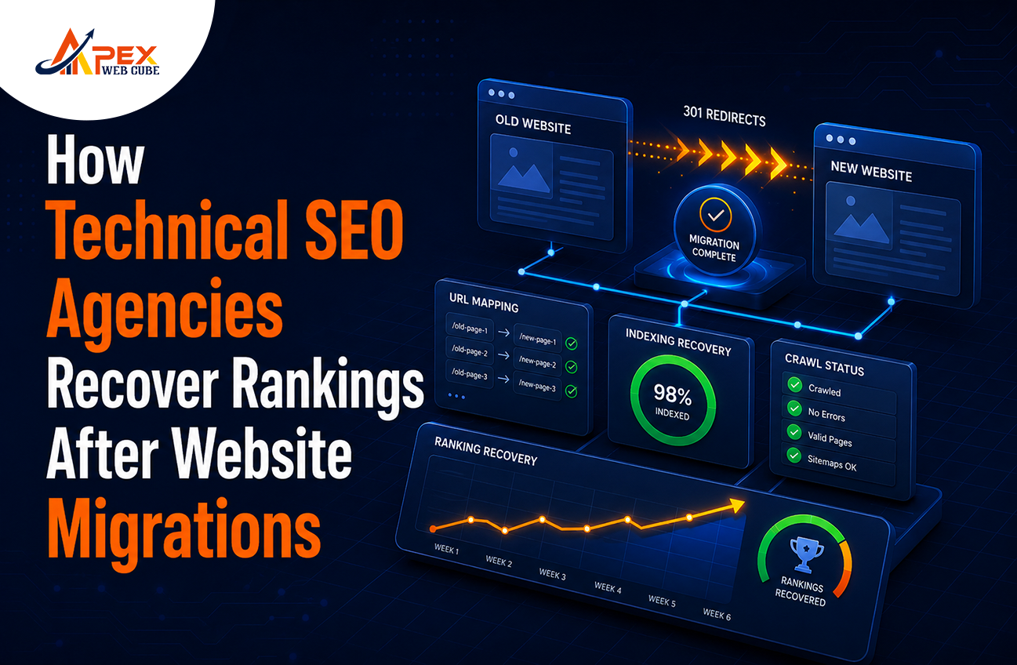
How Technical SEO Agencies Recover Rankings After Website Migration

Technical SEO Agencies

A business owner watches traffic charts drop into a steep decline immediately following a major digital brand overhaul. The company website looks modern and loads incredibly fast, but the steady flow of organic customer leads disappeared overnight. This exact scenario plays out across countless corporate boards every week when web overhauls go wrong. Moving a business website to a new host, combining domains, or changing the code architecture is a common growth step, but it often triggers a severe search tracking penalty if executed without precision. The hidden issues usually involve broken redirect loops, missing code tags, and lost database paths that simple scanning tools completely overlook.

Recovering those lost visitor numbers requires a deep look under the hood of the web server. Experienced tech consultants do not just hope for automated re-indexing; they systematically rebuild the trust signals that search spiders require to understand a changed domain structure. This comprehensive guide details the precise methods utilised by specialised digital groups to locate traffic leaks, fix hidden structural bugs, and restore lost keyword positions.

The Reality of Post-Migration Traffic Drops

technical seo services agency

A sudden drop in visibility right after launching a new setup is a standard technical seo services agency issue, but it can be fixed with the right approach. Search engines need time to crawl new systems and update their index files, which explains the initial turbulence. If the traffic decline continues past a few weeks, a serious code error or a broken redirect map is usually the main cause.

Data from major industry audits shows that nearly sixty per cent of website migrations experience a loss in search visibility due to poor planning. The core issue centres on a breakdown in communication between design assets and server protocols. While visual layout teams focus entirely on user experience, server optimisation teams ensure search bots can actually read the updated content files. When a business loses structural authority, the cause is rarely the new design itself. Instead, the loss comes from breaking the technical foundations that previously connected older pages to search engines.

Experienced digital growth professionals know that a drop in visitor metrics is completely treatable. Finding the source of the drop requires shifting focus from surface elements to internal server responses. Fixing these problems quickly prevents permanent loss of domain ranking power.

Initial Diagnostic Steps for Fast Recovery

technical seo agencies

The first step in fixing a broken migration is gathering raw server data rather than guessing based on standard traffic charts. Top technical seo agencies begin the recovery process by analysing search console accounts to separate minor sorting shifts from actual system crawling failures. This phase requires comparing historical data logs with current server reports to pinpoint exactly where the processing engine is stumbling.

Checking index status reports is the fastest way to spot deep structural issues. A massive surge in unindexed pages alongside a dropping count of valid URLs means search spiders are getting lost in the new setup. This imbalance shows that search engine bots are finding old paths but cannot access the new versions. Engineers look for a high volume of server error codes to see if the server is rejecting search bot requests entirely.

Another urgent area is checking the live crawl rate configuration. A major drop in daily bot requests implies that search systems have encountered a technical barrier, like an accidental script block or a loop that drains loading capacity. Resolving these tracking errors immediately helps search engines start processing the updated pages correctly.

Fixing Broken Redirect Maps and URL Mapping

The most common reason for a sudden drop in rankings is a broken or incomplete redirect strategy. When older page URLs are not properly mapped to their new locations, search engines cannot transfer accumulated trust to the updated pages. A common mistake is pointing every single old URL straight to the new homepage, which ruins specific keyword equity.

Fixing a broken redirect system requires building a clean, side-by-side URL map to ensure every old link leads to a highly relevant new page. This process involves checking the server configuration file to ensure all routing rules are processing instantly at the server level.

Critical Redirect Flaws to Eliminate

  • Multi-Step Dynamic Redirect Loops: This happens when an old link routes through multiple intermediate steps before hitting the final destination, which exhausts search crawling budgets.
  • Irrelevant Catch-All Routing: Sending thousands of old, specific service links directly to the main homepage tells search systems that the original specialised content no longer exists.
  • Mixed Protocol Redirections: Allowing old secure URLs to bounce through insecure web paths before landing on the final secure destination causes browser security issues.
  • Lingering Internal Dead Ends: Leaving old system links live within the internal site text instead of updating them to point directly to the new destination creates user friction.

Avoiding these redirect mistakes keeps search engines moving smoothly through the new structure without hitting technical dead ends. The smoother the tracking experience is for search engine bots, the faster the domain will regain its historic positions.

Restoring On-Page Architecture and Tag Integrity

During major website rebuilds, critical backend markers are often stripped out by content management systems or accidental template overwrites. Meta descriptions, header tags, and alt text for images frequently get reset to default values during data migrations. This loss of page metadata causes search engines to misinterpret the core focus of previously high-performing pages.

Rebuilding this framework requires a deep crawl using specialised tools to compare old page elements with the new live setup. Content structure must match the old system precisely, especially for primary headings that anchor specific ranking positions. If a top-performing page previously used a clear, descriptive header, replacing it with vague text will confuse search algorithms.

Internal linking paths must also be restored to reflect the original site authority distribution. When old pages are unlinked from the main navigation or lose their contextual internal links, they become isolated. Restoring a balanced internal link structure ensures that both users and crawl bots can discover core landing pages easily.

Resolving JavaScript Rendering and Indexing Glitches

Modern websites rely heavily on advanced JavaScript frameworks to deliver interactive user experiences. While these platforms look great, they often present major visibility challenges if search bots cannot render the script content efficiently. If the server delivers an empty HTML file and expects the browser to do all the heavy lifting, search systems may skip reading the content entirely.

Expert technical seo solutions require verifying that the server provides fully rendered HTML directly to search crawlers. This approach ensures that search bots can read all text, links, and layout elements immediately without waiting for complex scripts to execute. Testing this setup involves viewing the processed page source directly inside search console tools to confirm that all text fields are visible.

Ensuring that all structural scripts, like tracking tags and schema data, load without errors prevents search engines from abandoning the crawl. When scripts render correctly on the server side, indexing speeds increase significantly.

Reconfiguring XML Sitemaps and Robots.txt Files

A chaotic instructions file can completely halt a recovery plan. During website development, programming teams often add restrictive block commands to the instructions file to keep staging environments private. If these blocks are accidentally left live during the official launch, they will stop search engine spiders from viewing the live domain.

Cleaning up the instructions file requires removing any rules that block access to core asset folders, design styles, or script files. Search engines need full access to these assets to analyse page layouts accurately. Once these blocks are cleared, the next step is updating the XML directory paths.

The directory layout should temporarily feature two distinct map files during the recovery phase. The first file should list all the new URLs to encourage fast indexing of the new structure. The second file should contain the old URLs that have been redirected. Leaving the old links active in a dedicated sitemap helps search bots crawl the old paths, recognise the permanent redirect commands, and transfer historical ranking signals faster.

Optimising Core Web Vitals and Server Speed

Website migrations frequently involve a change in hosting platforms or content management systems, which can negatively impact page loading speeds. Search engines prioritise fast-loading sites, so that a slow database setup can trigger a drop in search visibility. Heavy image files, unoptimized script packages, and slow server response times are common culprits after a migration.

Fixing performance bottlenecks requires implementing a smart asset management plan. Compressing large media files and using modern web formats significantly reduces loading strain. At the same time, combining global style sheets and script files minimises the number of server requests required to display a page.

Setting up advanced caching rules ensures the web server can deliver saved page layouts to visitors instantly. Minimising server processing delays helps the updated website meet top speed standards. A fast, responsive website provides a great user experience and signals to search engines that the new domain is highly reliable.

Monitoring Log Files for Crawl Error Cleanup

Log file analysis provides an accurate look at how search engines interact with a website. While third-party scanning applications can simulate search spiders, server logs record actual visits from real search engine bots. Reviewing these server records helps teams see exactly which pages are being crawled and where bots are encountering errors.

When analysing server logs after a migration, look for a high frequency of missing file errors on high-priority URLs. These errors indicate that search engines are trying to find historical pages that are missing proper redirection. Spotting these broken paths allows teams to implement immediate fixes before search engines drop the URLs from their index.

Monitoring log files also reveals if search spiders are wasting time on duplicate URLs or system tracking codes. Clearing these dead ends helps maximise the crawl budget, ensuring search bots focus their energy on indexing valuable, high-quality landing pages.

Core Tracking Metrics for Migration Recovery

  1. Server Response Code Distribution: Tracking the percentage of successful transfers compared to redirect holds and broken file drops reveals overall crawl health.
  2. Daily Spider Request Volume: Monitoring the total volume of daily bot requests helps confirm that search engines have not blocked the domain.
  3. Unique URL Processing Breadth: Watching how many individual resource paths are crawled each week ensures no section of the site is isolated.
  4. Byte Transfer Speed: Measuring data transfer speeds confirms the new hosting environment handles search traffic loads efficiently.

Harnessing Search Console Data for Quick Wins

Search console dashboards offer actionable insights for identifying quick optimisation opportunities during a migration recovery. Sorting performance reports by impression drops highlights which specific terms and pages lost visibility fastest. Often, a page loses rankings simply because a key phrase was omitted during the content refresh.

The URL inspection tool is highly effective for pushing critical updates live. Manually submitting high-priority service paths forces search systems to queue the pages for fast re-evaluation. This manual push bypasses standard crawl schedules, helping restore visibility for core business terms within days.

Reviewing the internal security and enhancement tabs ensures all structured data fragments remain valid. If schema formatting was broken during the migration, fixing those script errors restores rich snippets in search results, helping boost organic click-through rates.

Re-Establishing Domain Authority and Backlink Signals

A website migration can occasionally break the connection between external backlinks and your live pages. If high-authority external sites point to old URLs that now return missing file errors, that valuable link equity is completely lost. Restoring domain authority requires ensuring all external link value flows smoothly into the new site structure.

The first step involves extracting a complete list of external links using link analysis tools to find the most valuable referring domains. Check each link to confirm it routes through a clean permanent redirect to the correct new page. If any top-tier links hit broken pages, implement immediate redirect corrections.

For maximum impact, reach out directly to major referring publishers and request that they update the target links to the new URL format. Updating these links at the source removes redirect latency, giving the new domain an immediate boost in authority and helping speed up ranking recovery.

Long-Term Monitoring and Performance Benchmarking

The recovery process does not end once historic ranking positions begin to stabilise. Search algorithms continue to evaluate the reliability and speed of the new website structure over several months. Consistent monitoring ensures that temporary ranking recoveries turn into permanent market growth.

Setting up automated tracking alerts for server error spikes helps teams catch and resolve new issues before they impact search visibility. It is also important to track organic traffic patterns alongside user engagement metrics like bounce rates and session durations. If visitors leave the new layout quickly, search engines may adjust rankings down regardless of technical health.

Conclusion

A successful website migration requires ongoing collaboration between design teams and server optimisation specialists. Maintaining high technical standards allows a business to update its digital presence while protecting its historic search visibility. Partnering with a dedicated technical seo services agency like Apex Web Cube ensures that your website migrations are executed seamlessly, allowing your business to preserve its hard-earned rankings and continue driving sustainable organic growth.

FAQs

What causes a website to lose search rankings after a migration?

Rankings typically drop when broken redirect maps prevent search engines from finding the new pages. Other common causes include accidental blocks in the robots configuration file, missing meta tags, and slow server performance on the new host. When search spiders encounter these technical issues, they struggle to crawl the site, leading to a drop in organic visibility.

How long does it take to recover lost traffic after a migration?

With a focused strategy, initial ranking improvements often appear within two to four weeks. A complete recovery of historic traffic levels generally takes between one and three months, depending on website size and crawl frequency. Resolving server errors quickly and updating sitemaps helps accelerate this processing timeline.

Why should a business hire technical seo agencies for a migration?

Specialized tech consultants bring deep experience, advanced diagnostic tools, and structured frameworks to complex web projects. They identify hidden script errors, optimize server response logs, and build precise redirect maps that standard plugins often miss. This pro-active approach prevents major traffic losses and ensures a smooth transition.

How do you identify broken redirects after launching a new design?

Teams use specialized log analysis software and search console crawl reports to locate broken links. Filtering these reports highlights paths that return missing file errors or create infinite redirect loops. Reviewing this data allows engineers to correct routing paths and ensure a smooth crawl experience.

Can a change in hosting platforms cause a drop in keyword rankings?

Yes, if the new hosting server has slow response times or experiences frequent downtime, search engine rankings can decline. Slow loading speeds frustrate users and signal to search bots that the site is unreliable. Upgrading server resources and optimizing asset configurations helps maintain high search visibility.

What is the best way to handle old website URLs that no longer have a matching page?

Old URLs should be redirected to the most relevant sub-category page rather than a generic homepage. If no matching or related content exists on the new site, a clean missing file status code is appropriate to signal that the page has been intentionally removed. This prevents search engines from getting stuck in irrelevant redirect loops.

How does server-side rendering help protect website visibility?

Server-side rendering ensures that search bots receive fully readable HTML content immediately upon requesting a page. This eliminates the risk of search spiders skipping over important text or links locked within complex JavaScript frameworks. Providing clean text files directly from the server speeds up indexing and improves overall visibility.

Should a business update its external backlink profile after changing domains?

Yes, updating top-tier external links to point directly to the new URL format is highly beneficial. While permanent redirects pass most of the link authority, direct connections remove redirect latency and maximize domain equity. Reaching out to key publishing partners to update these links provides an immediate boost to your recovery efforts.

Leave a Reply

Your email address will not be published. Required fields are marked *