
A client once told me his last agency sent him a spreadsheet with 200 backlinks in one month. He was thrilled for about three weeks, right up until his rankings dropped off a cliff and he got a manual action email from Google. That spreadsheet was not proof of good work. It was proof of exactly the opposite.
Stories like that are not rare in this industry, which is honestly a little frustrating given how much money changes hands over link building every year. Businesses invest in SEO Link Building Services expecting growth, and instead they get a pile of links from sites nobody’s ever heard of, sitting in some corner of the internet that a real reader would never stumble across.
This blog covers exactly that. What separates a solid seo link building services provider from one that’s setting you up for a penalty six months down the road, and what a legitimate process actually looks like from the inside.
Key Takeaways
- Real link building depends on human outreach, not automation, so timelines of weeks per placement are normal, not a delay.
- Relevance matters more than raw Domain Authority when judging a backlink’s actual value.
- Unnatural link velocity and over-optimized anchor text are the two biggest red flags in a monthly report.
- Full transparency, meaning clickable URLs and real metrics, should be non-negotiable in any reporting dashboard.
- Cheap link packages almost always trade quality for volume, and that trade tends to cost more later.
Google’s spam detection systems are specifically trained to flag sudden spikes in backlink acquisition, which is one reason a slow, steady link profile often ranks better than an aggressive one.
Here’s a number that should worry every marketing manager reading this: search quality raters have flagged thousands of link schemes over the past two years, and a chunk of those links were bought by businesses that thought they were hiring a legit link-building SEO company. They weren’t being careless. They just didn’t know what questions to ask before signing the contract.
That’s really the whole problem with agency link-building services. From the outside, one agency’s pitch deck looks a lot like another’s. Everyone promises “high DA backlinks” and “white hat only” and a nice little graph going up and to the right. But the actual work behind those promises varies wildly, and the gap between a good link-building partner and a bad one can cost you months of rankings, or worse, a manual penalty that takes half a year to recover from.
This piece walks through what actually separates a trustworthy provider from one that’s going to wreck your domain quietly. No fluff, just what to check before you hand over a retainer.
Table of Contents
Why Link Building Still Matters in 2026
A lot of people assume backlinks stopped mattering once AI search took over. That’s not really true. Google and Bing still use backlinks as one of the strongest trust signals they have, and even AI-driven answer engines lean on domain authority and citation patterns when deciding which sources to trust. A site with zero external validation just doesn’t look credible to a crawler, no matter how well the content reads.
The catch is that link building has gotten harder to fake. Old tricks like directory submissions, comment spam, or bulk guest post networks got wrung out of Google’s algorithm years ago. What’s left is a smaller pool of links that actually move the needle, and getting them takes real outreach and a fair bit of patience.
What Separates a Real Link Building Seo Company From a Risky One
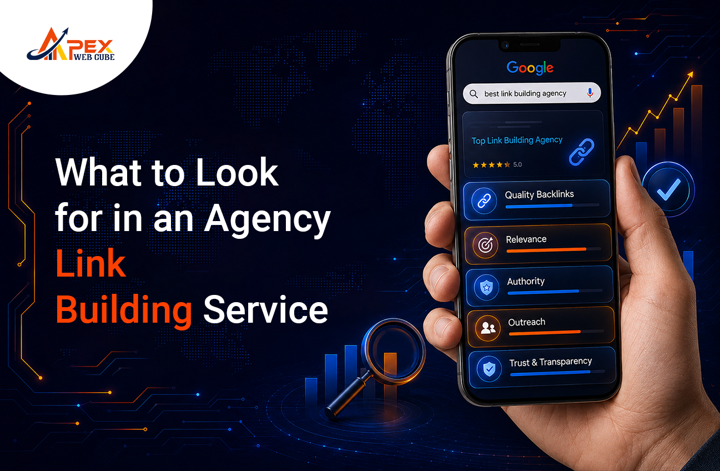
Three things tend to separate agencies that know what they’re doing from those running a numbers game.
A DA 70 site in an unrelated niche does less for you than a DA 30 site that’s actually read by your target audience. Ask which factor an agency prioritizes when picking a target site.
A serious provider will tell you outright that it’s a mix of guest posts, digital PR, and resource page outreach. A vague answer like “our network” usually means link farms.
Real link building takes weeks per placement. Anyone promising fifty links in seven days isn’t doing outreach; they’re buying space on a private network.

Red Flags That Show Up After You've Already Signed
Even agencies that look professional on paper sometimes cut corners once the contract’s signed. Link velocity that spikes unnaturally is the first one. If you suddenly go from five backlinks a month to eighty, that pattern looks exactly like what Google’s spam systems are trained to catch. A steady, believable pace is a sign of quality work, not slow progress.
Anchor text that’s too perfectly optimized is the second. If every link uses your exact target keyword as anchor text, that’s not natural linking behavior. Real editorial links use branded anchors, naked URLs, and generic phrases far more often than exact-match keywords.
Pull your backlink profile in a tool like Ahrefs every quarter and check the anchor text distribution yourself. If exact-match keywords make up more than 10 to 15 per cent of your anchors, something’s off.
No reporting transparency rounds out the list. You should get a live spreadsheet or dashboard showing every placed link, the referring domain, and its metrics. A monthly PDF with vague summaries and no clickable URLs is a reason to ask hard questions.
How a Trustworthy Link Building Process Actually Runs
Stage | What Happens | Rough Timeframe |
Audit | Reviewing your existing backlink profile and gaps versus competitors | Week 1 |
Strategy | Building a target list of relevant sites and outreach angles | Week 1-2 |
Outreach | Pitching content ideas, guest posts, or resource mentions | Ongoing |
Placement | Links go live gradually, not all at once | Week 3 onward |
Reporting | Monthly breakdown of new links, metrics, and anchors | Monthly |
Notice there’s no shortcut in that table. Every legitimate SEO link-building service process takes time because it depends on actual humans agreeing to publish something.
Ask to see this exact breakdown before signing. If an agency can’t explain its own process stage by stage, it probably does not have one.
A Quick Note on Pricing

Cheap link building is almost always a warning sign rather than a bargain. Quality guest post placements on genuinely relevant, well-trafficked sites cost money because the site owner is trading their audience’s trust for your content. When a price feels too good, it usually means the publisher is not vetting anything, or the site barely gets visited by real people anyway.
That does not mean the most expensive option automatically wins either. Price should track with the quality and relevance of the placement, not a flat per-link rate pulled out of thin air.
Conclusion
Good link building isn’t about chasing several backlinks each month. It’s about earning placements on sites your actual customers already trust, at a pace that looks believable to search engines, with full visibility into where every link lives. Anything less is a shortcut dressed up as a strategy, and shortcuts in this corner of SEO tend to cost far more than they save.
If you’re evaluating an agency link-building service right now, use the checklist above as your filter and ask the uncomfortable questions early. Apex Web Cube runs this exact process for clients who want backlinks that hold up under scrutiny, not just numbers on a report. That’s the standard Apex Web Cube holds every placement to, whether it’s a guest post or a digital PR mention.
FAQs
What is an agency link-building service?
It’s a service where an agency handles outreach, content placement, and backlink acquisition on your behalf, building your site’s authority through earned links from relevant, credible websites.
How much does a seo link building services package usually cost?
Pricing varies by niche and link quality, but real guest posts or digital PR placements cost more than bulk link packages since quality outreach takes genuine time and relationship building.
How long before link building shows results?
Most businesses see ranking movement within three to six months, since search engines need time to crawl, index, and trust new backlinks before they influence rankings meaningfully.
Is guest posting still an effective link-building strategy?
Yes, on genuinely relevant, well-trafficked sites with editorial standards. It loses effectiveness fast when done through low-quality networks built purely to sell links.
Can bad link building hurt my website?
Yes, Spammy or unnatural link patterns can trigger manual penalties or algorithmic devaluation, sometimes wiping out rankings that took years to build.
What's the difference between white hat and black hat link building?
White hat link building earns links through outreach, content value, and relationships. Black hat methods rely on paid networks, spun content, or automated placements that violate search engine guidelines.
How do I know if my link building seo company is doing legitimate work?
Ask for transparency on link sources, monthly reporting with clickable URLs, and a steady, natural pace of new links rather than sudden spikes that look manufactured.